.avif)



A model that performed well for months starts making worse predictions. Error rates climb in one customer segment. A forecast that used to land within a few percent now misses badly, and nothing in the model changed. No one shipped a new architecture, retrained on new data, or touched the weights. The model is the same. The world it sees is not.
That gap between the data a model trained on and the data it meets in production is AI data drift, and it's one of the most common reasons machine learning systems quietly degrade after deployment. Drift comes from two very different places, though, and most teams only instrument for one of them. Some drift happens because the real world genuinely moved. Some happens because a change upstream reshaped the data without anyone announcing it. Telling those two apart is what separates teams that chase drift forever from teams that prevent a large share of it before it ever reaches a model.

What is AI data drift?
AI data drift is a shift in the statistical distribution of the input data a model receives in production compared to the data it trained on. The model learned patterns from one distribution, and when the live data stops matching that distribution, predictive accuracy erodes, often gradually and without an obvious alarm. Evidently AI frames it simply: a model performs well on data that resembles its training set, so when the inputs keep changing in ways the model never saw, its predictions stop generalizing.
A retail demand model offers a clean example. Train it on years of in-store sales, then watch a marketing push move most purchasing to a mobile app, and the input mix shifts toward a channel the model barely saw in training. The model didn't break. The data underneath it did.
The honest framing, and the one this piece builds on, is that drift has more than one root cause. The retail case is the world changing. A renamed column three services upstream is something else entirely, and the fix is not the same.
Types of data drift and the terms that get conflated
"Drift" is used loosely, and the surrounding vocabulary gets mixed together in practice. For an engineer trying to diagnose a degrading model, the distinctions matter mostly because they point at what changed and where it originated.
- Data drift: the distribution of the input features changes. The model still maps inputs to outputs the same way, but the inputs it sees no longer look like the training inputs.
- Concept drift: the relationship between inputs and the target changes. The thing being predicted behaves differently than it did, so the learned mapping is now wrong even if the inputs look familiar. Data drift and concept drift often occur together, but neither requires the other.
- Prediction drift: the distribution of the model's outputs shifts. It's frequently used as a proxy signal when ground-truth labels arrive too late to measure accuracy directly.
Drift also varies in shape over time: sudden drift from an abrupt change, gradual drift as conditions slowly move, and recurring drift that follows seasonal or cyclical patterns. Practitioners use these labels interchangeably more often than the textbook definitions suggest, so the practical question stays the same: did the world move, or did something in the pipeline move?
What causes AI data drift?
Sort the causes into two buckets, because they demand opposite responses. One bucket is external and unpreventable. The other is internal, self-inflicted, and largely avoidable.
Environmental drift: the world moved
This is drift in its classic sense. User behavior shifts, a new market comes online, seasonality kicks in, a competitor changes the landscape, or macro conditions move. The data-generating reality changed, and no amount of upstream discipline stops that. Environmental drift is a fact of operating a model in a live world, and the only real defenses are detection and retraining.
Upstream drift: the pipeline moved
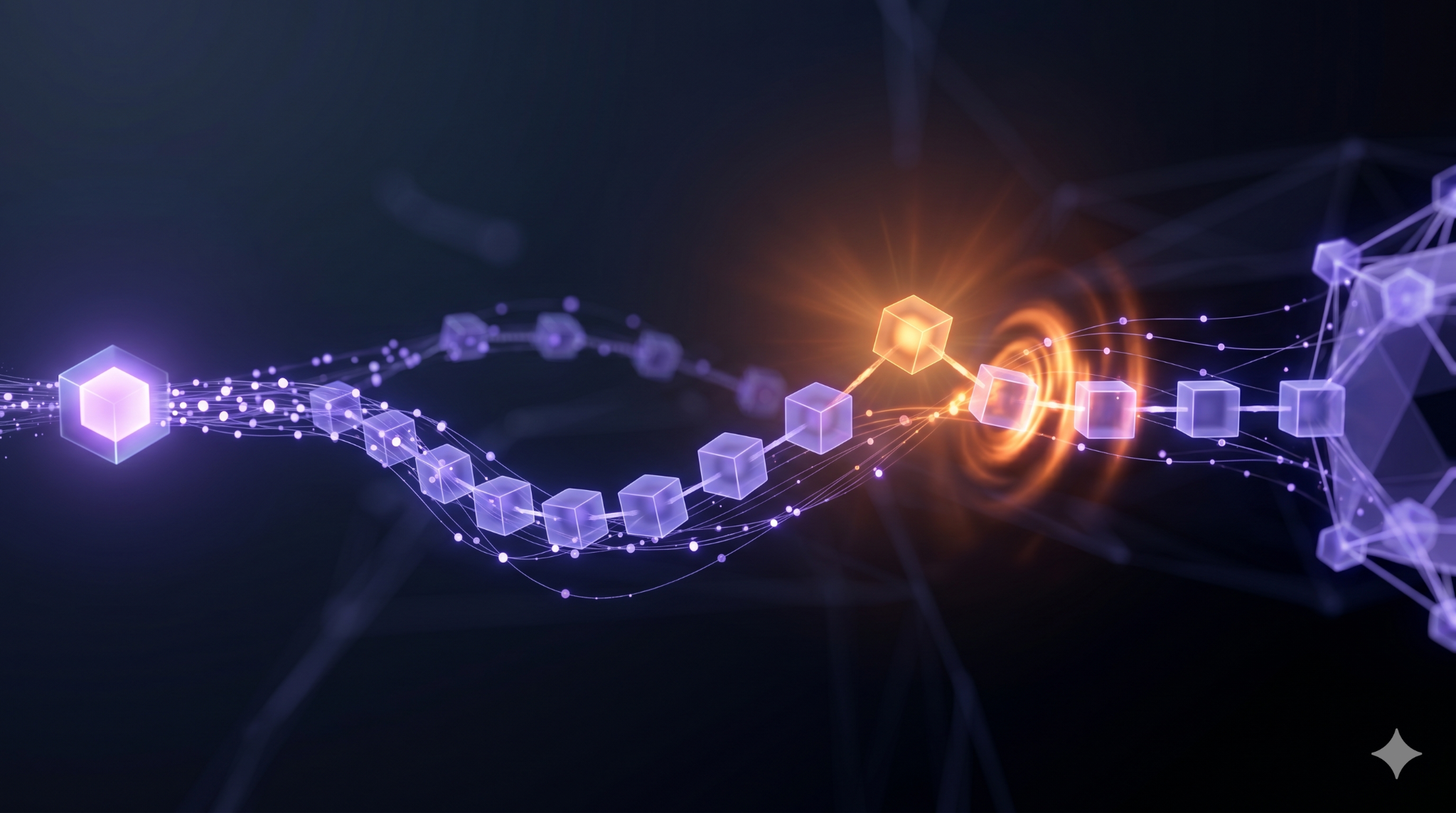
This bucket gets far less attention and is the one a software engineer actually controls. A producer renames a field. A column's type changes. A unit silently switches from one scale to another. An enum gains or loses a value. A field that was never null starts arriving null. None of these is the world changing. Each is a code change in a data-producing service that reshapes the feature distribution downstream, and the model registers it as "drift" because, statistically, that's exactly what it looks like.
Consider a concrete version of this. An engineer removes a .toString() call on an order ID because the IDs are always numbers anyway. The change looks reasonable, passes a unit test that never cared about the type, and ships. Downstream, a field that every consumer expected as a string now arrives as a number. A model that one-hot encoded or hashed that field as a categorical value now sees something it can't interpret, and its predictions degrade. The schema changed at the source, not the world.
Change is the root cause of a large share of what teams file as drift incidents. Schema shifts, semantic redefinitions, and broken assumptions about a field's meaning do more damage than "bad data" in the abstract, precisely because they're silent and they originate in code no one connected to the model's behavior.
How to detect AI data drift
Detection compares a recent window of production data against a baseline (usually the training distribution) and quantifies how far they've diverged. A few methods do most of the work in practice, and an engineer should know what each one is actually measuring.
- Kolmogorov-Smirnov (K-S) test: a nonparametric two-sample test that compares the cumulative distribution functions of baseline and production data. It makes no assumption about the underlying distribution and works on a single continuous feature at a time. If the test rejects the null hypothesis that both samples come from the same distribution, that feature has likely drifted, per IBM.
- Population Stability Index (PSI): bins a variable's distribution and compares the proportion of observations in each bin between baseline and production, then aggregates the differences into a single score. Higher PSI means more divergence. It originated in credit-risk scorecards and suits categorical or binned continuous features.
- Distance and divergence metrics: Kullback-Leibler divergence (asymmetric), Jensen-Shannon divergence (its symmetric variant), and Wasserstein distance measure how far two distributions sit from each other. These extend more naturally to harder cases than the single-feature tests above.
One precision point worth holding onto: K-S and PSI evaluate one feature at a time, so detecting drift across many correlated features at once generally calls for model-based or distance-based approaches rather than running univariate tests in isolation. When labels lag, teams lean on prediction drift as a proxy, since output shifts often surface trouble before true accuracy can be computed.
All of this is necessary, and it's where most tooling lives. Data observability platforms do this class of monitoring well. What detection tells you is that a distribution moved. What it doesn't tell you is that the move came from a type change in a service two repositories away, and by the time a monitor fires, the data has already landed in production.
Detecting drift isn't the same as preventing it
For environmental drift, detection plus retraining is the correct and only answer. The world moved, the model needs to relearn it, and monitoring is how a team knows when to trigger that. There's nothing to prevent.
Upstream drift is a different story. Detecting it after the fact means paying the full cost of an incident to find a problem that was avoidable at the pull request. Someone notices a malfunction, traces it from a dashboard back through aggregations to a source system, figures out when the behavior started, and eventually pins it to a one-line code change. The later a schema or semantic change is caught, the more expensive it is to unwind, a point Gable illustrates with the Mars Climate Orbiter unit mismatch, the same class of unit mismatch that a constraint on the interface would have caught at the code boundary.
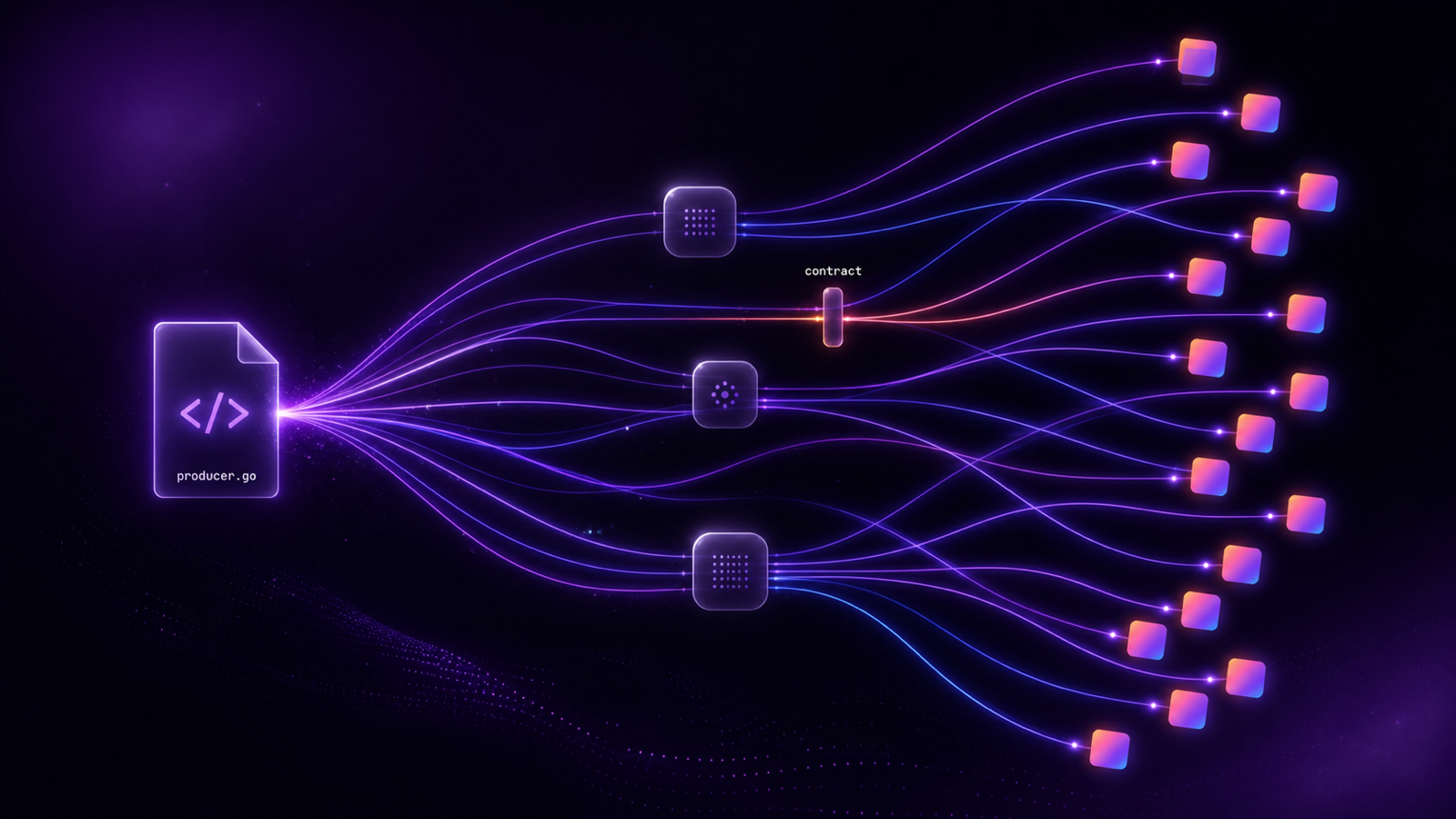
This is where data contracts change the equation. A data contract is a version-controlled agreement, written as a YAML document, that specifies a data asset's schema, semantics, constraints, SLAs, and owners. The producing team and the consuming teams agree on what the data looks like and what it means, and that agreement is enforced where the data is produced rather than where it's consumed.
Gable enforces those contracts using static code analysis of data-producing code, run inside CI/CD, catching changes visible in the producing code such as a field's type, name, or nullability. When a code change would violate an existing contract, such as the order-ID type change above, the check surfaces it during the pull request: a blocking mechanism can fail the build until the violation is resolved, and an informational mechanism warns the producer which downstream consumers a backward-incompatible change will affect. The schema and semantic constraints are evaluated before the change merges, so the bad data is never produced in the first place.
Worth being exact here, because the distinction is the whole point. A drift monitor measures the symptom, the distribution shift, after the data exists. A data contract enforced in CI/CD prevents the upstream cause, the schema or semantic change, before the data exists. Those operate at different layers and answer different questions. Gable prevents the producer-side change; it does not measure downstream distributions, and conflating the two would miss what each is for.
Where prevention fits alongside drift monitoring
None of this argues for turning off monitoring. Environmental drift is real, it's unpreventable, and detection plus retraining remains the right response to it. A model serving a changing world needs eyes on its inputs and outputs regardless of how disciplined the pipeline is.
What contracts remove is the slice of "drift" that was never the world changing at all, only an unannounced schema or semantic change at the producer. Assign that data asset an owner, write the expectations into a contract, and enforce it in CI/CD, and that category of incident stops being a drift investigation. It becomes a failed check on a pull request, caught by the engineer who introduced it, in the workflow where they already work. Catching schema and meaning drifts during pull-request checks, rather than in production dashboards, is the difference between proactive gates and reactive firefighting.
Stop monitoring for drift you could have prevented
Drift detection earns its place for everything outside a team's control. The world will keep moving, models will keep needing to relearn it, and monitoring is how teams stay ahead of that. But a real share of the model degradation that gets labeled "data drift" never came from the world at all. It came from a field that changed type, a unit that quietly switched, a column that got renamed in a service no one tied to the model. Those are upstream changes, and they're preventable.
Owning the schema beats chasing the distribution. When data producers agree on explicit expectations and enforce them in CI/CD, the preventable share of drift disappears before it can degrade a single prediction, which leaves monitoring to do the job it's actually good at. To see the thinking behind moving data quality upstream, read the Shift Left Data Manifesto, or get started with Gable to put contracts in front of the changes that cause drift.

Gable
June 30, 2026

.avif)
.avif)