.avif)



Data issues rarely start as technical failures. Instead, they often begin as coordination problems. For instance, when a pipeline breaks, a dashboard goes stale, or a model starts producing incorrect results, organizations suddenly have to pull in multiple teams to investigate—engineers to dig through logs, analysts to question metrics, and platform teams to check infrastructure. But the real blocker isn’t debugging. It’s determining who owns the change that caused the issue and who’s responsible for fixing it.
As data-driven platforms grow, this pattern becomes more frequent since with growth comes evolving schemas, increasing data producers and consumers, and rippling effects of breaking changes. Yet many organizations still rely on implicit ownership, where teams assume that someone else is responsible for maintaining data quality, managing breaking updates, or communicating impact to stakeholders. That assumption might hold at small scales, but once it breaks, trust breaks with it.

That breakdown is exactly why data ownership is essential. When it’s explicit, teams can manage change deliberately, enforce accountability, and maintain trust as systems scale. But without it, even the most advanced data platforms will eventually collapse under the weight of uncoordinated change.
The real meaning of data ownership
Many teams treat data ownership as an administrative concept that connects to titles, permissions, or access control. But in practice, ownership has to do with accountability, not hierarchy.
A data owner is the person or team that’s responsible when data changes affect others. They own schema evolution, contract stability, and downstream impact. When something breaks, ownership answers a simple but critical question: who is accountable for fixing this and preventing it from happening again?
In many organizations, this responsibility is implicit or fragmented. For example, data engineering teams manage pipelines, developers change schemas in code, and platform teams operate infrastructure. But no single owner is accountable for how those changes propagate across the organization’s data systems. As a result, failures like broken pipelines and silent schema drift become coordination problems rather than engineering crises.
Proper data ownership closes this gap by tying data assets back to the teams that define and evolve them. This aligns accountability with change and ensures that responsibility doesn’t disappear as systems scale and data sharing increases. But without this foundation, data governance, quality, and contracts become reactive measures rather than preventive guardrails.
What happens when data has no clear owner?
Unclear data ownership rarely presents itself as a governance issue. Instead, it shows up as everyday operational failures: broken pipelines, inconsistent metrics, and incident triage that drags on because no one knows who's responsible. In most cases, missing data quality checks aren’t the cause here. These issues stem from the fact that responsibility and accountability are too scattered across teams, leaving no single owner accountable when it all breaks down.
Here’s how unclear data ownership impacts business processes and public-facing services:
Pipelines break due to coordination failures
Most pipeline failures stem from uncoordinated change and siloed data management practices, not subpar data or faulty logic. Say a developer changes a schema, removes a field, or modifies a type or default value upstream to make a local improvement, for instance. Downstream consumers often only discover breaks due to this change after jobs fail or dashboards go blank.
Without clear data ownership, teams can’t review schema changes with downstream impact in mind. And when there’s no single accountable party to evaluate compatibility or communicate intent, even routine changes create outages.
Trust erodes as systems fail
When consumers can’t rely on data stability, they stop depending on shared assets and instead create defensive copies, add redundant checks, or maintain parallel pipelines “just in case.” Over time, this behavior fragments the overall data platform strategy and creates siloes between data and engineering teams.
This results in increasing duplication, multiplying inconsistencies, and rising change costs. And ironically, attempts to move faster after this will only end up slowing everyone down because no one trusts the system enough to move confidently.
Incidents stall when ownership is unclear
When something breaks, teams should immediately know who owns the affected data or pipeline. But in reality, engineers often have to comb through Git history, Slack threads, and documentation to infer ownership while production issues linger. This uncertainty disrupts coordination and turns remediation into a manual, time-consuming process.
Without clear data ownership, there’s no feedback loop to improve workflows, strengthen contracts, or prevent repeat failures. Incidents then become one-off fire drills rather than feedback that helps teams strengthen contracts and prevent repeat failures.
Why ownership is the foundation for scaling
Early-stage enterprise systems can function without explicit data ownership because their scale is limited, teams are small, data flows are simple, and the people who build pipelines are usually the same ones who are consuming them. But this isn’t true for larger-scale enterprises.

As organizations grow, systems accumulate more data consumers, producers, and interfaces for growing feature and performance requirements. In practice, this means a single dataset may power analytics dashboards, machine learning models, partner integrations, and customer-facing features, all with different data owners and diverse expectations. At that point, the problem is no longer technical complexity but proper accountability and data governance.
By anchoring accountability to the teams that define and evolve data upstream, data ownership creates a control point for managing change, coordinating impact, and enforcing governance as systems scale. Here’s why data ownership serves as the foundation for this change at scale:
Scaling brings change, not stability
Scaling platforms doesn’t make schemas more stable. Instead, it only increases change’s frequency and impact.
As teams introduce new fields, optimize storage, and respond to regulatory requirements like GDPR, changes accumulate faster than teams can coordinate them. Each modification may seem reasonable in isolation, but without clear accountability, there’s no systematic way to evaluate compatibility or downstream impact.
Here, clear ownership establishes a control point for change by enabling teams to assess backward compatibility, route notifications to affected consumers, and define stability expectations that downstream systems can rely on. Without this structure, change becomes reactive and risk quietly accumulates in the background.
Coordination fails before tooling does
Many teams attribute scaling failures to tooling limits, orchestration frameworks, or storage layers. But in practice, coordination usually breaks first. This happens because when software and data teams lack shared understanding around which datasets are critical, experimental, or safe to modify, small changes quietly accumulate until more obvious issues surface in production.
Clear accountability introduces the structure that teams are missing by defining stability expectations, review paths, and escalation guidelines upfront. That way, organizations can give developers the context they need before writing code, which allows teams to move faster while enforcing contract testing and managing change deliberately.
Ownership enables sustainable governance
Data governance frameworks often struggle at scale because they try to enforce rules after developers have already introduced change. But this reactive model can’t keep up with growing systems.
Shifting responsibility closer to the source transforms governance from a centralized function into a distributed operating model. This means that instead of relying on global controls, accountability lives with the teams that define and evolve the data in code. This makes governance adaptive and scalable without constraining how software teams build and iterate.
Data ownership, contracts, and accountability
Modern data systems already operate on implicit contracts. For instance, schemas, APIs, and events encode expectations around structure, semantics, and stability, and downstream teams build features based on those assumptions. When those expectations break, failures surface as pipeline outages, incorrect metrics, or silent data corruption.
Clear data ownership turns these implicit assumptions into enforceable data contracts by anchoring accountability to the teams responsible for defining and evolving data. Here’s how data ownership, contracts, and accountability all come into play:
Contracts fail when no one is accountable for change
Data contracts only matter when your developers are responsibly upholding them. But without clear accountability, these contracts degrade faster than organizations can detect or repair the damage. That’s because, instead of obvious breaking changes, failures often appear as schema drift—minor, uncoordinated modifications that quietly violate assumptions downstream.

From a producer’s perspective, these changes may seem harmless. But for consumers, they can break critical invariants, which leads to failed pipelines, incorrect analytics, or unreliable models that undermine trust in shared data.
Assigning responsibility for schema evolution and contract testing instead gives teams a concrete operating model for change. That way, engineers can evaluate backward compatibility, identify affected consumers, and coordinate rollout, which turns contracts from passive documentation into enforceable safeguards.
Ownership makes contracts operational
Many organizations introduce data contracts as documentation or validation layers in their data strategy. While this helps them establish expectations, these approaches don’t scale because they sit outside the development workflow. Contracts exist, but enforcement happens only after changes propagate, so accountability remains implicit, not explicit, throughout the data lifecycle.
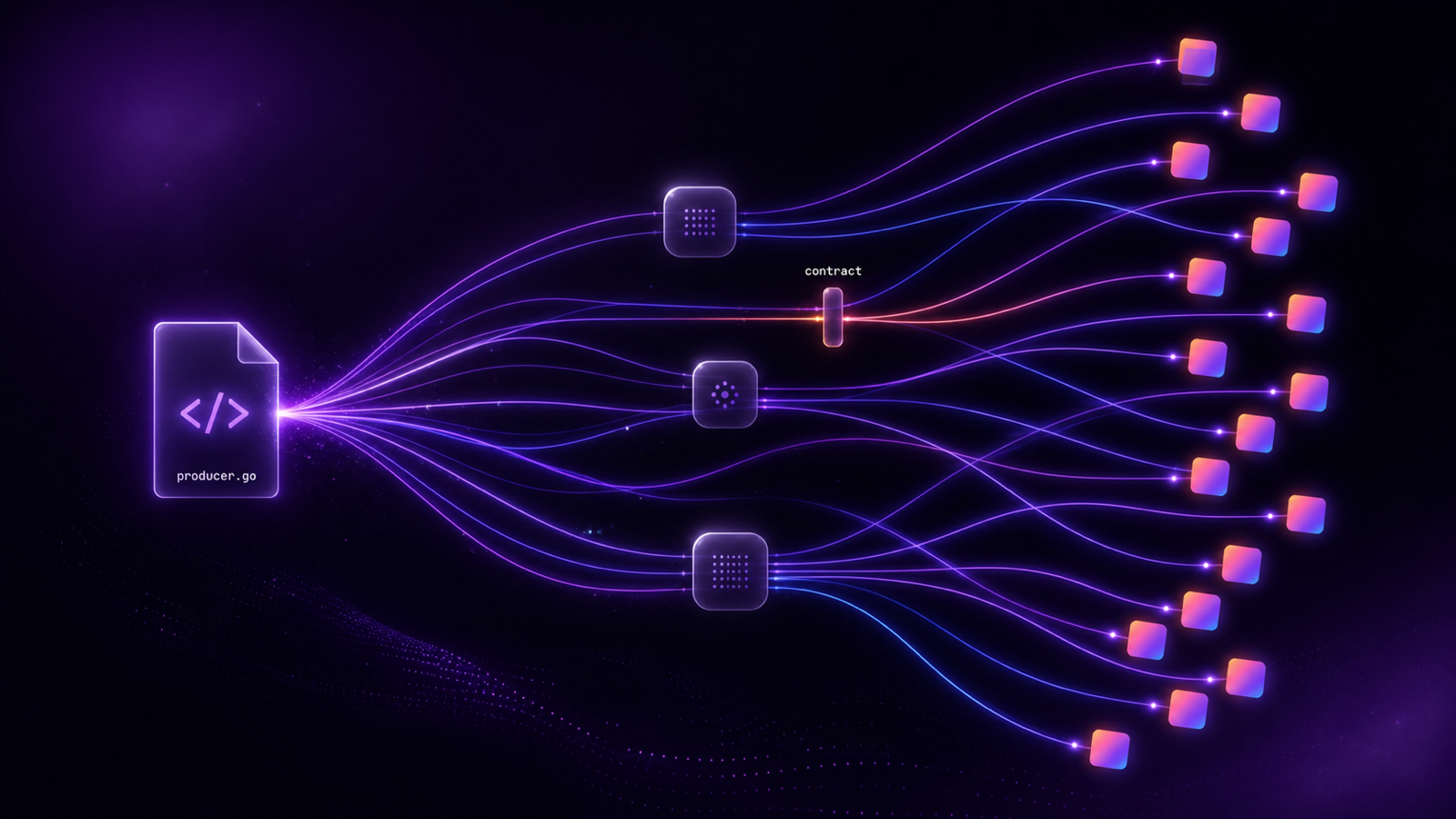
But when engineers define ownership in code, contracts instead become operational artifacts. That means developers catch contract violations before they ship rather than discovering them silently in production.
Accountability closes the gap between change and impact
Ownership also creates a feedback loop that many enterprise data platforms lack. With this loop in place, when a change causes a downstream impact, that signal will travel back to the source and allow owners to learn which changes are risky, which guarantees matter, and how they can tighten contracts.
If you don’t have this feedback loop, your data systems will accumulate risk without learning from past mistakes. But with ownership in place, incidents will become inputs for better design rather than isolated failures.
Data ownership vs. stewardship vs. custodianship
As data systems mature, teams often add roles to help them manage quality, regulatory compliance, and reliability. But without a shared understanding between teams, coordination breaks down and systems struggle to scale. That’s why clear distinctions between data ownership, stewardship, and custodianship are necessary to provide the structure that teams need to align accountability and operate more effectively.
Here’s how these roles connect to and differ from one another:
- Ownership defines accountability: Data ownership means assigning a clear point of responsibility for schema evolution, contract compatibility, and downstream impact. These owners decide when changes are safe, who to notify in case of issues, and how teams roll out breaking changes. That’s why this role must sit close to where your engineers are defining schemas and contracts.
- Stewardship ensures standards and quality: Data stewardship focuses on data quality, consistency, and adherence to the organization’s data policies. They also define naming conventions, validation rules, documentation expectations, and compliance guidelines so data remains usable across teams and trustworthy. However, data stewards aren’t responsible for change or accountable for schema evolution and contract violations.
- Custodianship focuses on infrastructure: Custodians are responsible for operating underlying data platforms like storage systems, pipelines, access controls, and reliability mechanisms. They also keep enterprise systems running, scalable, and secure. But what they aren’t responsible for is deciding what data means, how it should evolve, or who depends on it.
Data ownership doesn’t replace data stewardship or custodianship, but it does enable them. That’s because when accountability is explicit, engineers can enforce standards right from the beginning, platforms can scale safely, and organizations can deliver features without breaking compliance or trust.
Gable’s approach to data ownership at scale
Data ownership can’t rely on assumptions or manual documentation at scale because repositories change continuously, teams reorganize, and pipelines evolve faster than static docs can keep up. Instead, teams need to ground ownership in the systems where they define and evolve data. Without that foundation, accountability will break down and contracts will become difficult to enforce consistently.
That’s where Gable comes in. By operationalizing ownership directly in code-level metadata and connecting data assets directly to the engineers and teams responsible for defining and changing them, Gable creates a clear, reliable ownership model. This approach gives organizations durable ownership, enforceable contracts, and shared visibility across engineering and data teams without slowing development or adding governance overhead.
If your teams are also struggling with clear data ownership and you want to see the real benefits of a shift-left data approach, explore Gable’s demo to learn more.

Gable
May 4, 2026

.avif)
.avif)