.avif)



Organizations are collecting more data than ever in an effort to generate actionable insights, but increased volume alone doesn’t guarantee better business outcomes. Without consistent data quality and reliability, more data often amplifies risk rather than value.
That risk becomes obvious when source data contains inconsistencies, delayed updates, or duplicates. These issues propagate downstream, and decisions made based on unreliable data lead to serious business problems.
Because of this, organizations can’t treat data quality as a periodic concern. They must instead track accuracy, reliability, and data quality metrics in real time and continuously adapt systems as conditions change across data sources.
Data monitoring provides the framework to implement these practices. By bringing observability and real-time tracking into production workflows, it surfaces shifts in patterns, metrics, or behavior as they happen. This early visibility allows teams to intervene before issues propagate through pipelines and impact decision-making.
What is data monitoring?
Data monitoring is the continuous evaluation of business data to ensure that it meets defined quality standards and business rules. It uses real-time system logs, operational metrics, and historical trends to validate the accuracy, relevance, and timeliness of data. This continuous visibility prevents data quality degradation over time.
By monitoring datasets, pipelines, and key metrics in real time, teams gain early signals when data begins to drift from expectations. With this insight, they can then adjust data systems proactively to improve quality while maintaining alignment with data governance requirements.
In practice, data monitoring applies across the entire data lifecycle. From ingestion through transformation and consumption, monitoring systems actively validate, observe, and govern dataflow across the lifecycle.
Data monitoring vs. data observability
Data monitoring and data observability both answer the same fundamental question: can teams trust the data powering their systems and decisions? While both play essential roles in maintaining healthy dataflows, they operate at different layers and address different levels of complexity.
Enforcement vs. context
At a high level, data monitoring focuses on enforcement. Teams define expectations for data quality, then continuously check whether incoming data meets those standards. When a metric breaches a threshold, monitoring systems surface the issue through alerts or dashboards. This makes monitoring effective for catching breakages, regressions, and silent failures in real time.
However, data observability goes beyond simple detection. Instead of just asking if data violated a rule, it determines why the issue occurred. It connects signals across ingestion, transformation, and modeling stages to provide context around failures. By incorporating data lineage, metadata, and operational signals, observability helps teams understand how data changed, where it changed, and which downstream consumers are currently feeling the pain.
Navigating the differences
The distinction between these two becomes most visible when troubleshooting complex issues. Because data monitoring typically evaluates isolated components, it shows that a freshness check failed, but it doesn't explain the root cause. Observability, in contrast, examines the entire dataflow.
Data Monitoring
- Primary goal: Detect known failures and rule violations
- Posture: Reactive; surfaces issues after they happen
- Scope: Isolated metrics like freshness and volume
- Key output: Alerts and dashboards
Data Observability
- Primary goal: Understand system health and why issues occur
- Posture: Proactive; exposes patterns and dependencies
- Scope: Full pipeline context and cross-stage signals
- Key output: Root cause analysis and downstream impact
Timing and remediation
Timing is the final distinguishing factor. Data monitoring is inherently reactive, telling you what's already broken. Data observability enables a more proactive posture by exposing failure modes as data moves through pipelines. Lineage is the hero here, showing where data originates, how it evolves, and where issues first emerge. This context allows teams to identify risks earlier and intervene before a minor anomaly becomes a total data outage.
Despite these differences, monitoring and observability complement each other. Monitoring provides the "smoke alarm" for when something breaks, while observability supplies the map teams need to find the fire and put it out. Together, they create a complete view of data health, from detection to resolution.
Data monitoring vs. data contracts
Data monitoring and data contracts both protect data reliability and trustworthiness. Understanding how they differ is essential for choosing the right tools, setting the right expectations, and enforcing data quality effectively at scale.
Timing and intervention
The primary distinction lies in when each approach intervenes. Data monitoring detects issues after the data is produced. As data flows through pipelines, monitoring systems evaluate freshness, volume, distribution shifts, and anomalies. This approach helps teams catch breakages and silent failures during data usage, but it functions reactively.
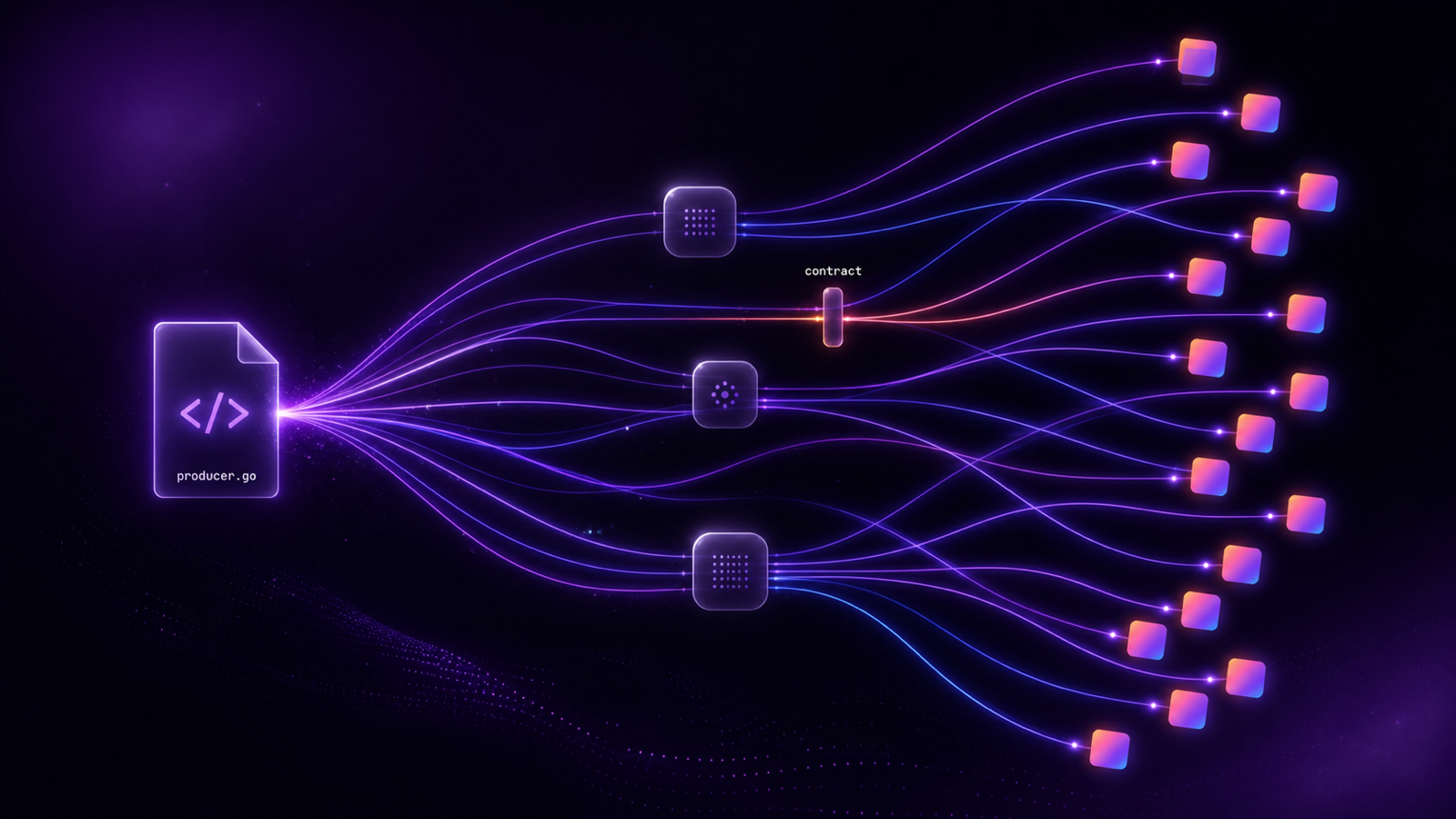
Data contracts, on the other hand, move "shift-left" into the application code level. They define explicit expectations for what data contains and how it’s formatted before it ever reaches consumers. When a producer introduces a change that violates these agreements, the system flags the issue at the source, preventing contaminated data from flowing downstream.
Clarity vs. investigation
In terms of scope, monitoring explains what went wrong, but not necessarily what teams promised. Because alerts often rely on statistical thresholds, teams still need to investigate whether a change was expected or violates an agreement.
Data contracts resolve this ambiguity by making expectations clear between data producers and consumers upfront. This shifts data quality enforcement from reactive investigation to proactive prevention.
Data Monitoring
- Intervention point: Downstream (Warehouse/Analytics)
- Primary goal: Detect and alert on existing issues
- Responsibility: Usually owned by data teams
- Outcome: Firefighting and incident triage
Data Contracts
- Intervention point: Upstream (Application Code)
- Primary goal: Prevent issues before they occur
- Responsibility: Shared between developers and data teams
- Outcome: Reliable data supply chains
Better together
While they serve different roles, data monitoring and data contracts work best in tandem. Data contracts define the rules for data use, and monitoring verifies that systems continue to comply with those rules in production. By using contracts to configure monitoring thresholds, teams ensure that violations surface the moment data no longer meets expectations, creating a scalable approach to reliability.
Core components of an effective data monitoring system
As data moves continuously through modern pipelines, teams need a structured way to observe changes, interpret signals, and respond before issues cascade downstream. But doing so requires an effective data monitoring system that covers everything from capturing real-time signals to preserving historical context.
Below are the core components that make up a robust data monitoring system and how each one contributes to maintaining reliable data as systems scale:
Observation
Observing involves collecting and tracking real-time metrics as data moves. By monitoring metrics, logs, and events continuously, teams can surface unexpected patterns, anomalies, or trends that signal emerging data issues.
Analysis
A monitoring system analyzes collected data in near real time, then applies predefined rules and thresholds to detect deviations, errors, and abnormal behavior. It may also use statistical methods or machine learning techniques to interpret patterns, correlate signals, and identify risks or recurring issue trends.
Alerting
Data monitoring systems automatically send alerts or notifications to system administrators or business users as soon as an issue occurs in the analysis step. These timely alerts help users act immediately and minimize the impact.
Reporting
Reporting provides visibility into monitoring outcomes through dashboards, charts, and summary views that surface trends, incidents, and overall system health over time. These views help teams understand recurring issues and enable data-driven decision-making.
Logs storage
Log storage retains monitoring data for a defined period to support investigation, auditing, historical analysis, and regulatory compliance. This clear retention and monitoring strategy avoids unnecessary storage costs and balances visibility with efficiency.
Move beyond reactive monitoring
Effective data monitoring systems rely on automation across the entire lifecycle. By automating data lineage and collection, applying rules, and triggering alerts, teams gain continuous visibility into data changes.
However, visibility alone isn't enough. When teams place monitoring only at the end of the workflow, they can only flag issues after pipelines have already carried the damage downstream. Stronger systems define expectations earlier in the lifecycle by setting clear rules at the point where producers create and share data.
Gable makes it easier to put this shift-left approach into practice. By implementing data contracts at the application code level rather than just the warehouse, Gable enables monitoring systems to catch breaking changes at the source. This prevents data outages before they occur, bridging the gap between software engineers and data teams to ensure long-term reliability.
Don't wait for your downstream systems to break to realize there's a problem. Learn how to prevent data quality issues at the source with Gable.
Gable
April 27, 2026

.avif)
.avif)