.avif)



AI models are only as good as the data they train on, so teams spend real effort curating that data: cleaning errors, filling gaps, fixing mismatched formats, and getting datasets into shape before a model uses them. Most of that work happens after the data already exists, which means it’s spent correcting problems rather than preventing them.
Those problems usually start upstream. A field gets renamed, a column is dropped, or its data type changes in the application code that produces the data, and curation downstream inherits the mess. For software engineers, that’s the part worth paying attention to, because the code that creates the data is where many of these issues can be stopped before they ever reach a dataset.
The sections below cover what AI data curation is, why it carries more weight as AI systems scale, the core steps the process involves, and how to curate data at the source so the work stops being a perpetual backlog.

What is AI data curation?
AI data curation is the process of collecting, organizing, cleaning, annotating, and maintaining datasets so that AI and machine learning models train on accurate, consistent, and well-documented data. It spans the full lifecycle of a dataset, from acquiring raw data and enriching it with metadata to validating its quality and keeping it current as conditions change.
Two adjacent terms get conflated with it. Data cleaning, correcting errors and inconsistencies in raw data, is one step inside curation, not a synonym for it. Data labeling, annotating examples so a model can learn from them, is another single step. Curation is the broader discipline that organizes all of these activities around a goal: producing datasets a team can trust and reuse.
One characteristic of curation as it’s commonly practiced is worth naming up front, because the rest of this piece returns to it. By default, the work is reactive. Data is generated somewhere, it accumulates, and then curation begins. That ordering shapes everything about how much effort curation costs and how well it scales.
Why data curation matters for AI
AI raises the stakes on data quality because models inherit the flaws of what they’re trained on. Low-quality training data produces a garbage-in, garbage-out result: missing values, outliers, and inconsistencies distort what a model learns and degrade the accuracy of what it predicts. A model is only as reliable as the data underneath it, which makes curation a prerequisite for performance rather than a nice-to-have.
Scale makes the problem harder. Organizations now generate enormous volumes of data, with an estimated 149 zettabytes generated globally in 2024 and that figure expected to more than double by 2028. Manually curating data at that volume isn’t viable, which pushes teams toward automation and, more fundamentally, toward reducing how much cleanup is needed in the first place.
Regulation adds a third reason. The EU AI Act requires that high-risk AI systems be built on training, validation, and testing data that meet defined quality criteria, including that the data sets be relevant, sufficiently representative, and to the best extent possible free of errors. Curation is how teams meet that standard and, just as importantly, how they document that they’ve met it.
Taken together, these pressures change the calculation. AI raises the cost of bad data enough that where curation happens starts to matter as much as the fact that it happens at all.
The core steps of the data curation process
Curation practices vary by team, but most follow a recognizable lifecycle. What’s useful for an engineer isn’t just the list of steps, it’s noticing what failure each step exists to compensate for, because that points back to where the failure was introduced.
- Collection. Acquiring raw data from databases, APIs, event streams, and external sources. The step inherits whatever structure and quality those sources emit, including their inconsistencies.
- Cleaning. Correcting errors, handling missing values, and resolving inconsistencies. Most of what’s cleaned here traces to a producer that emitted the data in an unexpected shape.
- Annotation and labeling. Adding the labels and metadata a model learns from. Quality depends on a clear, consistent protocol, and label noise is a common source of degraded model performance.
- Integration. Combining data from multiple sources into a coherent dataset. Format and schema mismatches between sources surface here, often as silent breakages.
- Validation. Confirming the dataset meets quality and representativeness expectations before it’s used. This is where a contextual or distribution problem ideally gets caught.
- Maintenance and monitoring. Keeping datasets current as the real world shifts, watching for distribution drift, schema changes, and missing records over time.
Run down that list and a pattern emerges. Collection inherits upstream structure, cleaning fixes upstream errors, integration absorbs upstream mismatches. A large share of curation effort is spent compensating for decisions made before the data ever reached the curator. That observation is the hinge for the rest of this discussion.
Where most data curation goes wrong: fixing problems after they’re created
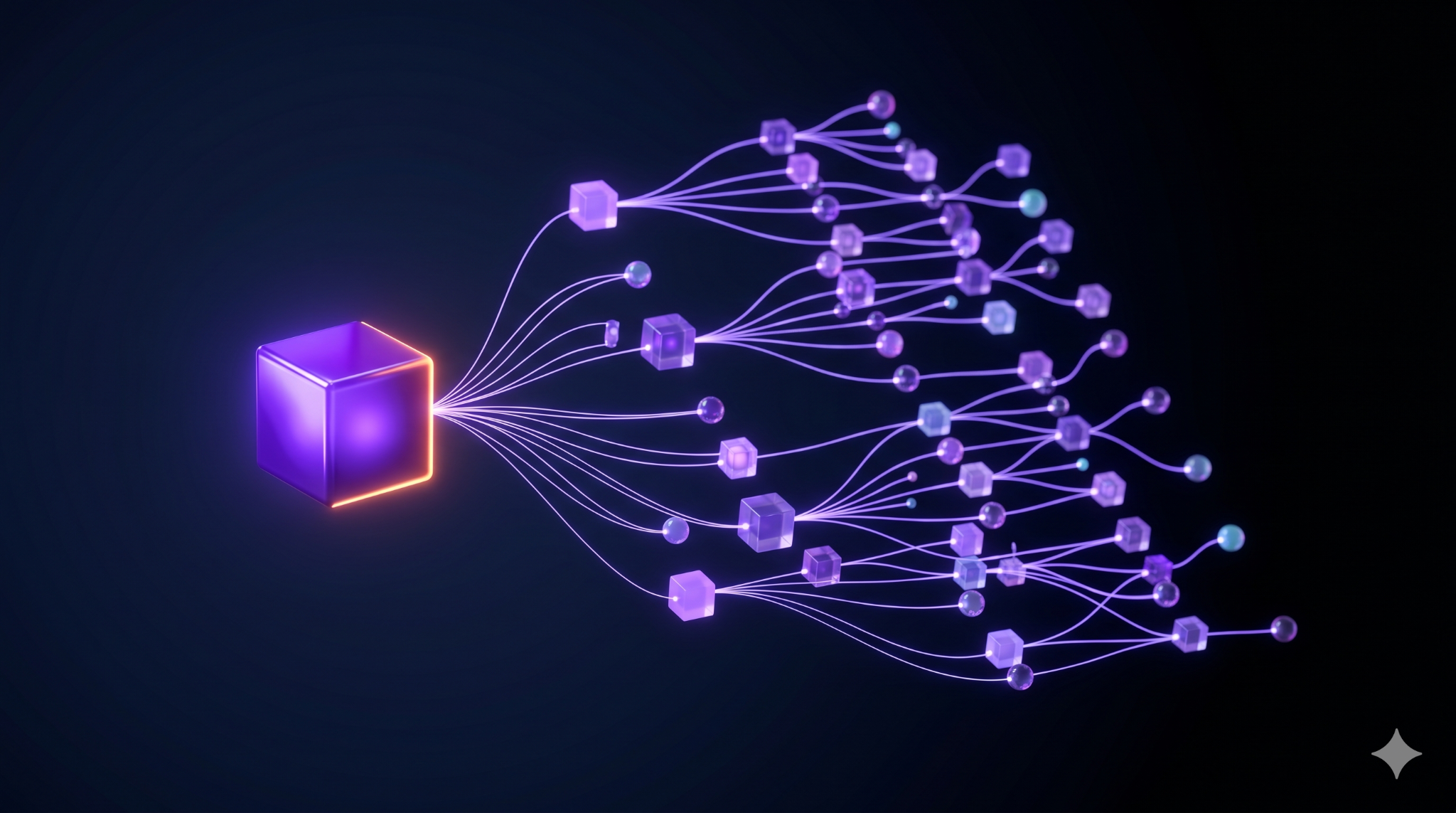
Curation as commonly practiced is downstream cleanup. A schema changes, a field goes missing, a data type shifts from string to number, and the curation pipeline catches it only after the change has already propagated into the lake, the feature store, or the training set. By then the fix is expensive: the bad data has been copied, joined, and used, and untangling it means tracing the problem backward through every system it touched.
The root causes sit on the producer side. A software engineer ships a routine code change that renames a field, drops a column, or alters a data type, with no insight into the downstream pipelines and models that depend on the old shape. The change is correct from the application’s point of view and quietly destructive from the data’s. These data anomalies become curation’s problem to detect and repair, even though curation had no hand in creating them.
Downstream-only curation also doesn’t scale. Every new data source multiplies the surface area that has to be cleaned, validated, and monitored, and the cleanup grows faster than the team. Schema changes that go uncoordinated between producers and consumers are among the most common and most damaging sources of this work. As long as the causes stay upstream and the cleanup stays downstream, curation stays a perpetual backlog.
Curating data at the source: a shift-left approach
A different approach moves quality, ownership, and definition upstream to the point of creation. Shift-left data thinking applies the same logic that DevOps brought to software: catch problems early, where they’re cheap to fix, rather than late, where they’re expensive. For curation, that means addressing the producer-side causes instead of endlessly cleaning up their effects.
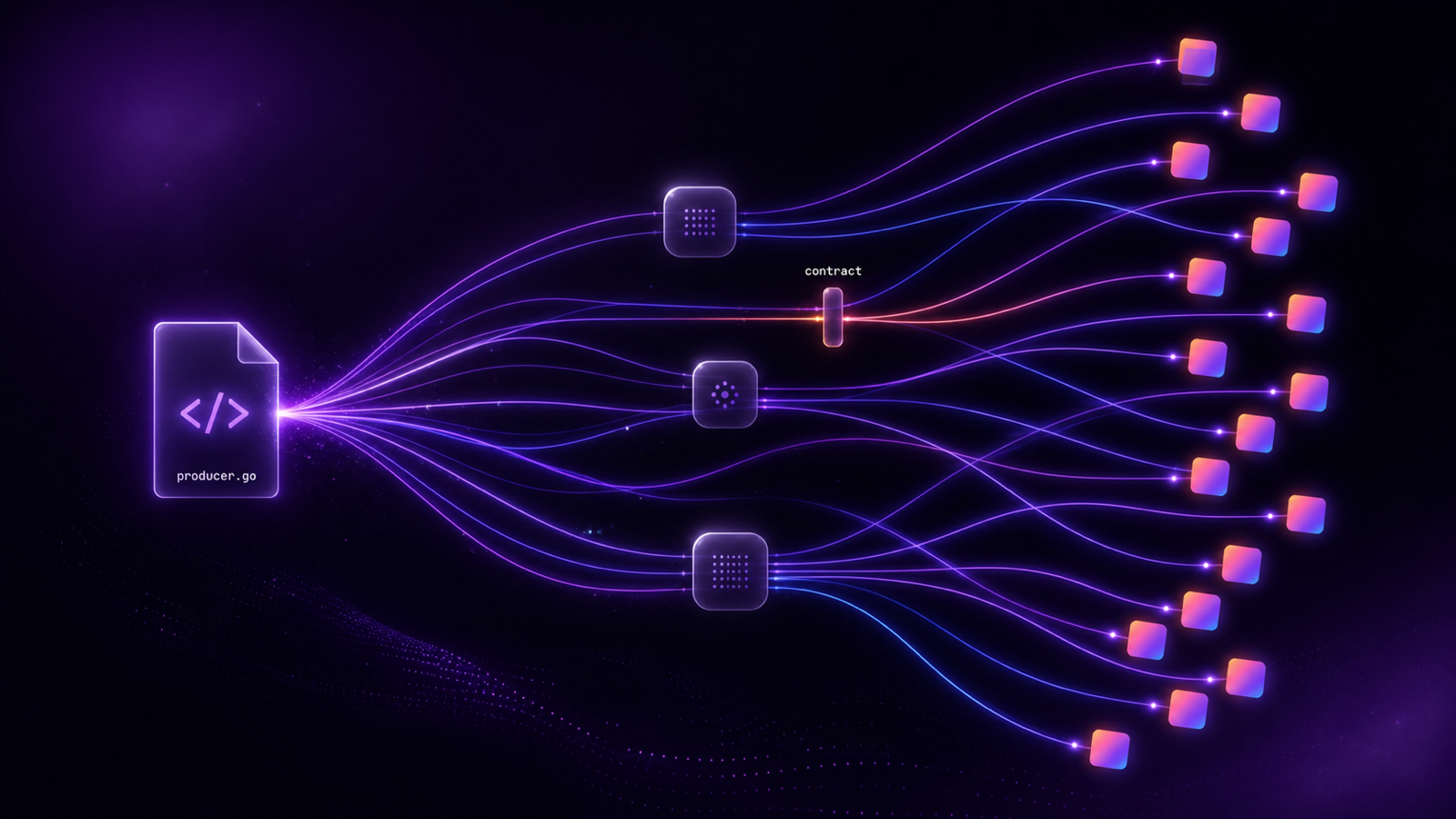
Data contracts are the mechanism. A data contract is an enforceable agreement on schema, semantics, constraints, and ownership between the producers who generate data and the consumers who depend on it. The contract makes expectations explicit and uses static analysis of the producing code to check proposed changes against them in CI/CD, before a backwards-incompatible change ships. When a code change would violate the contract, the check flags it at the pull request rather than days later in a downstream curation queue.
For a software engineer, this changes the experience in a concrete way. Data expectations become code that lives in the same workflow as everything else they ship, validated automatically at the point of change. The producer gets immediate feedback that a change breaks a downstream dependency, at the one moment when fixing it is trivial. Accountability lands where the change originates instead of with a data team that inherited a problem it can’t see the source of.
Shift-left curation complements the lifecycle rather than replacing it. Collection, labeling, and validation still happen. What changes is that the recurring upstream causes stop feeding the pipeline, so curation isn’t endlessly recompensating for the same class of breakage. The work that remains is the curation that genuinely adds value, not the cleanup that should never have been necessary.
Best practices for AI data curation that lasts
A few practices make curation durable instead of perpetual. Each works best when paired with addressing causes upstream rather than symptoms downstream.
- Version datasets and track lineage. Knowing which data version trained which model, and where each field came from, makes problems traceable and supports the auditability that regulation increasingly expects.
- Align producers and consumers early. Get explicit agreement on schema and semantics before data is generated, not after a break. Shared expectations prevent the misalignment that drives most downstream chaos.
- Automate validation instead of reviewing manually. Manual review can’t keep pace with data volume. Automated checks, ideally enforced in CI/CD, catch issues consistently and early.
- Treat data as a product. Apply the data as a product mindset so producers own the quality of what they emit, the way they already own application reliability.
- Build on a data quality foundation. Sound data quality management practices give curation a baseline to enforce against rather than a moving target.
Curation works best when it starts at the source
AI data curation earns its keep by giving models data they can be trusted on. The trap is treating it purely as downstream cleanup, where the same upstream causes generate the same breakages indefinitely and the backlog never clears. Curation gets dramatically more effective when the producer-side causes are handled at the point of creation, so the lifecycle isn’t spent recompensating for problems that a code change introduced and a contract could have caught.
That’s the role data contracts play. By making expectations explicit and enforcing them in CI/CD, Gable moves data quality upstream to where producers can own it, so curation downstream is doing real work instead of constant repair. For a deeper look at the thinking behind this shift, sign up for the Gable waitlist today.

Gable
June 30, 2026

.avif)
.avif)