.avif)


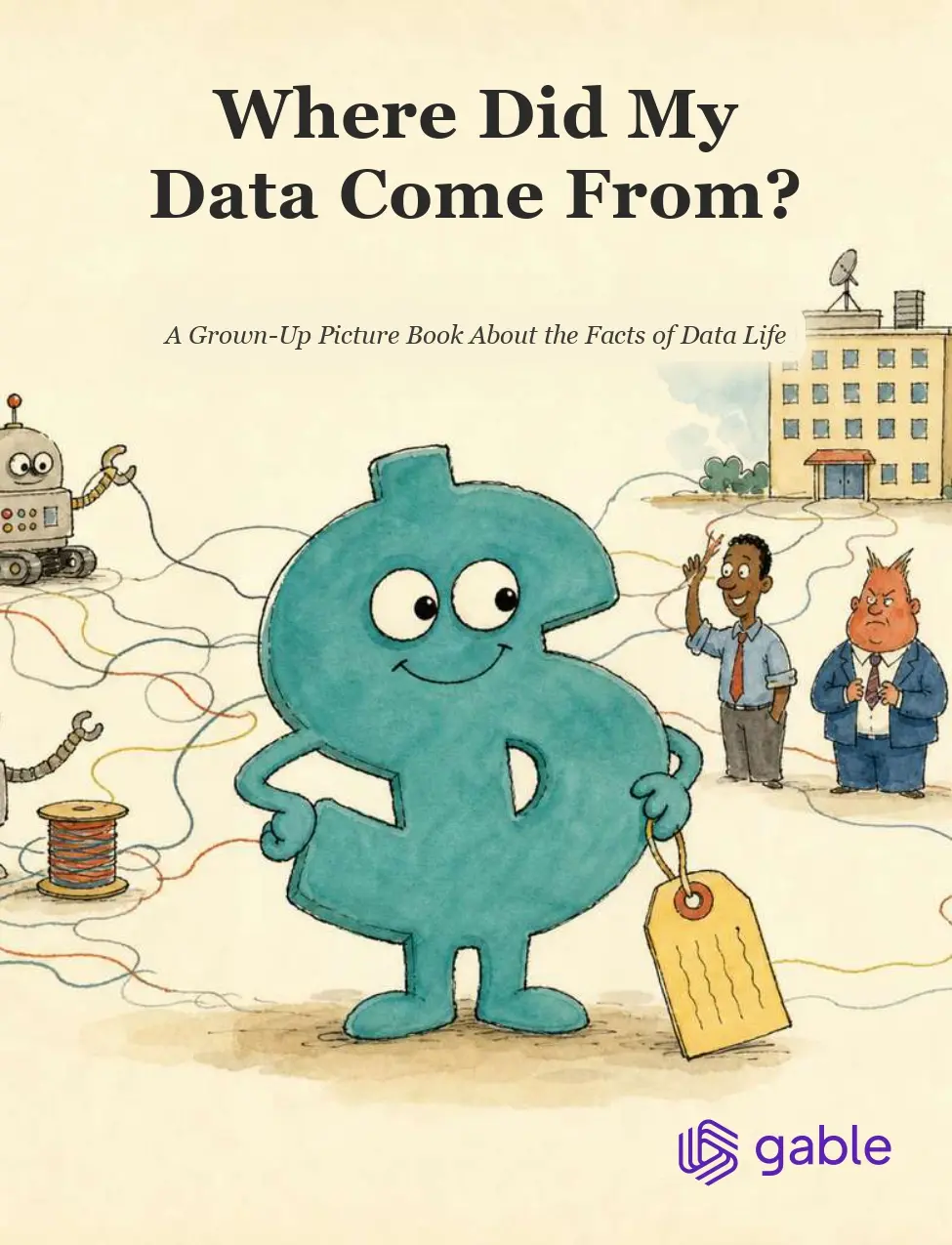

An autonomous agent reads a customer record, decides the address field looks incomplete, and writes a “corrected” value back to the source table. No one approved the change. The agent moves on, fires three more tool calls, and updates a downstream system that another team owns. Hours later, a revenue dashboard drifts, a model retrains on the altered field, and an engineer starts the slow work of tracing a number that no longer matches reality.
That sequence captures the problem with governing agentic AI. Agentic AI data governance is the practice of controlling how autonomous agents access, produce, and act on data so their behavior stays inside defined expectations. It overlaps with generative AI data governance, which centers on the data feeding models, but the harder question with agents is different: what happens when software starts changing data on its own, at machine speed, with no person in the loop at the moment of the change.
Traditional governance assumes that loop exists. A human requests access, a steward approves a schema change, an analyst reviews a number before it ships. Agents remove that assumption, and most governance programs were never built for a world without it.

Why autonomous agents break traditional governance models
Two properties of agents put pressure on controls designed for human-paced work.
The first is speed and volume. Agents act continuously and in parallel, so periodic reviews, manual approvals, and quarterly audits fall behind the moment an agent goes into production. Gartner predicts that organizations will abandon 60% of AI projects through 2026 if they aren’t supported by AI-ready data, and in a 2024 Gartner survey of 248 data management leaders, 63% said they either lack the right data management practices for AI or are unsure whether they have them (Gartner). Agents widen that gap, because they generate and mutate data faster than any review cadence can inspect it.
The second property is the one competing coverage tends to miss: agents aren’t only consumers of data. They’re producers.
Agents as consumers vs. agents as producers
Most agentic governance advice treats the agent as a consumer, something you grant access to and then watch. That framing matters, but it’s only half the surface area.
- Consumer-side risk: an agent reads data it shouldn’t, or reads more than its task requires. Access controls and monitoring address this, and they’re worth having.
- Producer-side risk: an agent writes to a table, calls a tool, or triggers an action that emits a record. When that output doesn’t conform to what downstream systems expect, the agent has quietly become an ungoverned data producer, and the corruption propagates before anyone notices.
A human producer at least operates inside a development process with reviews and tests. An agent acting at runtime has none of that unless something enforces it. The producer-side risk is where agentic governance gets genuinely new, and where access-monitoring tools stop being enough.
Consider a support agent authorized to update ticket records. A model upgrade changes how it formats a timestamp field, and the agent starts writing a subtly different format into a column three other systems read. Nothing is unauthorized. Access controls see a permitted write from a permitted identity. Monitoring eventually flags anomalies downstream, but by then a billing job has miscounted resolution times and a reporting pipeline has ingested thousands of malformed rows. The failure isn’t a breach. It’s a producer emitting data that no longer matches the contract its consumers depend on, and no checkpoint stood between the agent’s write and production.
Non-determinism compounds both risks. The same prompt can drive different actions on different runs, so governing agent behavior by enumerating expected outputs in advance doesn't scale. The durable control constrains the shape of what the agent is allowed to write, not the list of actions it might take to get there. That’s the same logic behind treating data governance as a lifecycle concern rather than a final checkpoint.
The core challenges data leaders face
Governing autonomous agents surfaces a recognizable set of problems, each made sharper by machine speed.
- Visibility. Teams often can’t say which datasets an agent reads or writes across systems, which makes both risk assessment and incident response slow.
- Ownership. When an agent produces a dataset, who owns it? Without a clear answer, agent-generated data accumulates with no accountable steward, and producer accountability erodes exactly where it’s needed most.
- Auditability. Compliance requires explaining why a system did what it did. Machine-speed decisions with no recorded expectation or owner are difficult to reconstruct after the fact.
- Runtime context creep. Agents assemble context dynamically from documents, APIs, and memory, which pulls governance toward what models receive at inference time. That’s real, and it’s the territory generative AI data governance covers. The production-side question stays distinct: what the agent writes back out.
Why monitoring and access control aren’t enough
Access controls and real-time monitoring are reactive guardrails. They catch misuse after an agent has already read or written, which means they detect the symptom rather than prevent the cause. For consumer-side risk, that’s a reasonable tradeoff. For producer-side risk, detecting a bad write after it lands still leaves the downstream cleanup, the drifted dashboard, and the retrained model.
Shifting left changes where the control sits. Instead of watching for problems downstream, a shift-left approach moves the check to the moment data is created or changed, including when an agent is the one doing it. The principle is the same one Gable CEO Chad Sanderson lays out in the Shift Left Data Manifesto: when contracts, lineage, and validation live at the code level, teams prevent breakages instead of chasing them. Applied to agents, the question shifts from monitoring what the agent already did to stopping a non-conforming action before it ships.
Governing agents at the point of action with data contracts
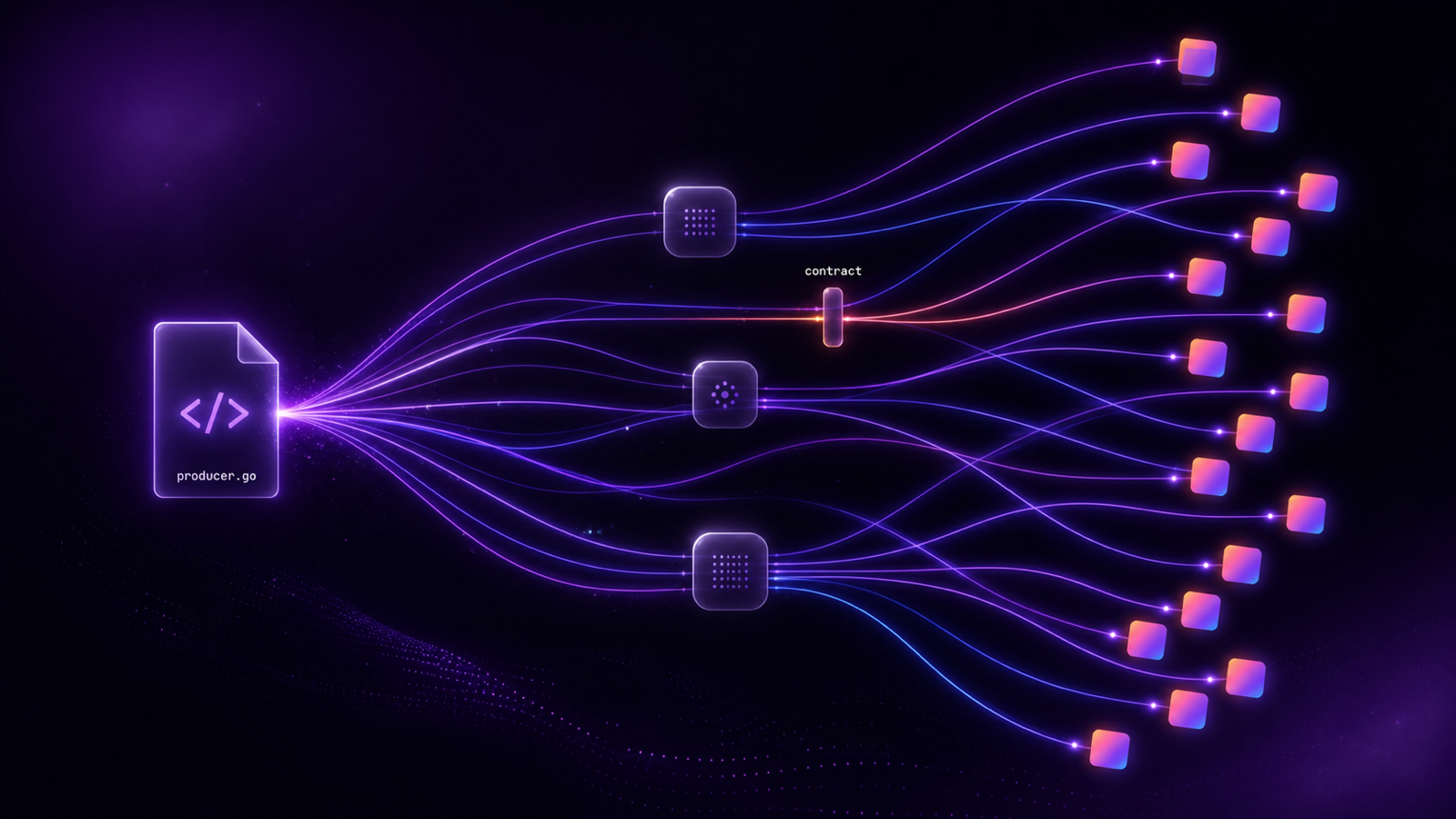
A data contract is a version-controlled agreement that captures the structure, semantics, operational expectations, and governance rules of a dataset right where the data is produced, in source code and CI/CD pipelines, so downstream systems never see unexpected changes. Each contract assigns an explicit owner, carries lineage, and leaves an audit trail.
That definition maps directly onto the agent problem. Treat an agent’s output the way a data contract treats any producer’s output: subject to an enforceable expectation, checked at the point of creation.

Gable enforces contracts through two complementary mechanisms. Blocking mechanisms break the CI/CD build until a contract violation is resolved, so a schema- or semantics-breaking change fails during pull-request checks rather than in a production dashboard. Informational mechanisms notify producers which consumers a backward-incompatible change will affect, so the people shipping the change see its blast radius before it lands. Teams tune enforcement to risk tolerance, from warnings on lower-stakes paths to hard stops on critical ones.
There are two distinct control points, and they do different work. At build time, contract checks in CI/CD catch the change that enables a bad write before it ships, when an engineer (or an agent operating through a code change) modifies a write path, the schema it targets, or the tool definition that formats its output, the violation fails the pull request rather than reaching production.
The support-agent timestamp failure is exactly this case: the formatting change arrived through a model or code update, and a contract on that path would have blocked the merge.
For writes an agent originates at runtime, the same contract definition is what makes runtime validation possible, the agent's output is checked against the contract at the point of creation and quarantined or rejected if it doesn't conform, rather than landing in the source table and propagating. The contract is the single source of expectation; CI/CD enforces it against changes, and runtime validation enforces it against live output.
It’s the same logic as governance as code, applied to a producer that happens to be autonomous. For a concrete sense of what a contract specifies in practice, the breakdown of data contract types walks through schema, constraints, and the rules a contract enforces.
Practical starting points for governing agentic AI
Bringing agents under governance doesn’t require rebuilding the data stack. A few moves establish control where it matters most.
- Inventory where agents read and write today, so the producer-side surface area is visible rather than assumed.
- Assign ownership to agent-produced datasets, so every output an agent generates has an accountable steward.
- Set contracts on the highest-risk write paths first, rather than trying to cover every interaction at once.
- Move the check upstream to where the agent acts, so enforcement happens at creation instead of in downstream monitoring.
These steps build on existing governance work rather than replacing it. For teams formalizing the broader program an agent strategy plugs into, data governance for AI covers the framework-level foundation.
Governing agents at the source
The agentic shift makes machine-speed, unsupervised data production a normal part of how systems run. Controls that depend on a human in the loop, or on catching problems after they surface, can’t keep pace with software that reads, writes, and acts on its own. The control that scales is the one enforced where data is created, in code, the moment an action happens.
Data contracts put that control in place for autonomous producers the same way they do for human ones: an enforceable expectation, an explicit owner, and a check that runs before a non-conforming change ever ships. To see how contract enforcement works at the code level, sign up with Gable.
Gable
June 26, 2026

.avif)
.avif)